

Role
Founding Product Designer
Timeline
Q2 2024 - Q3 2025
Skills
UX/UI Design
Interactive Prototyping
User Research and Testing
Prompt Engineering
Vibe Coding
Figma

TL;DR
CHALLENGE
Learning platforms were optimized for administration rather than outcomes, forcing educators into manual work and learners into rigid, one-size-fits-all paths. Despite advances in AI, assessment quality did not scale, personalization remained shallow, collaboration was limited, and learners lacked timely, actionable feedback, especially for performance-based skills like presentations.
SOLUTION
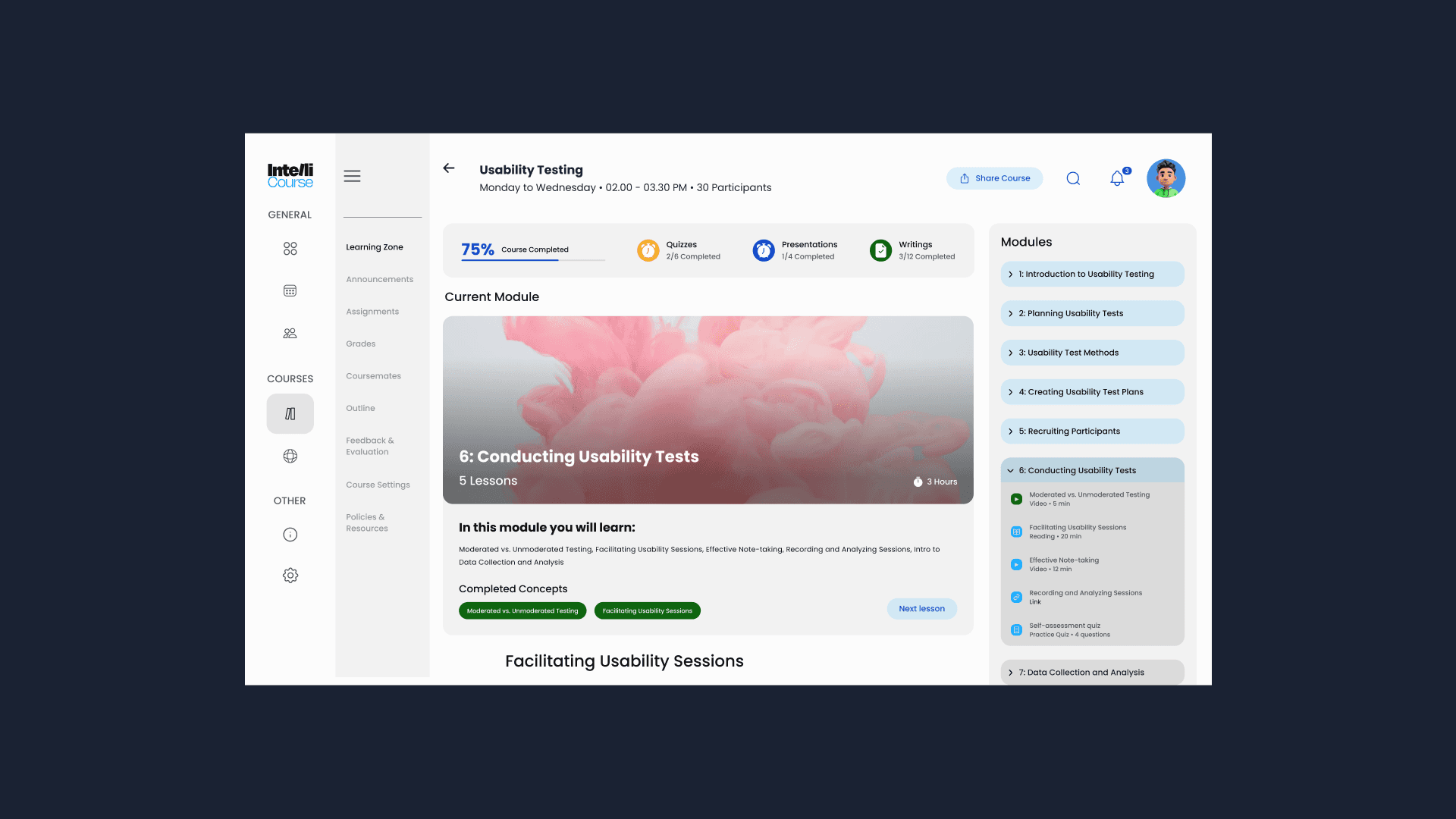
We built IntelliCourse as an all-in-one AI-powered learning ecosystem that transforms intent into action. Users can generate full courses in one click, receive instant, actionable feedback through AI-driven assessments including video presentation grading, and collaborate through shared courses and community channels designed for diverse learning contexts.
KEY IMPACT
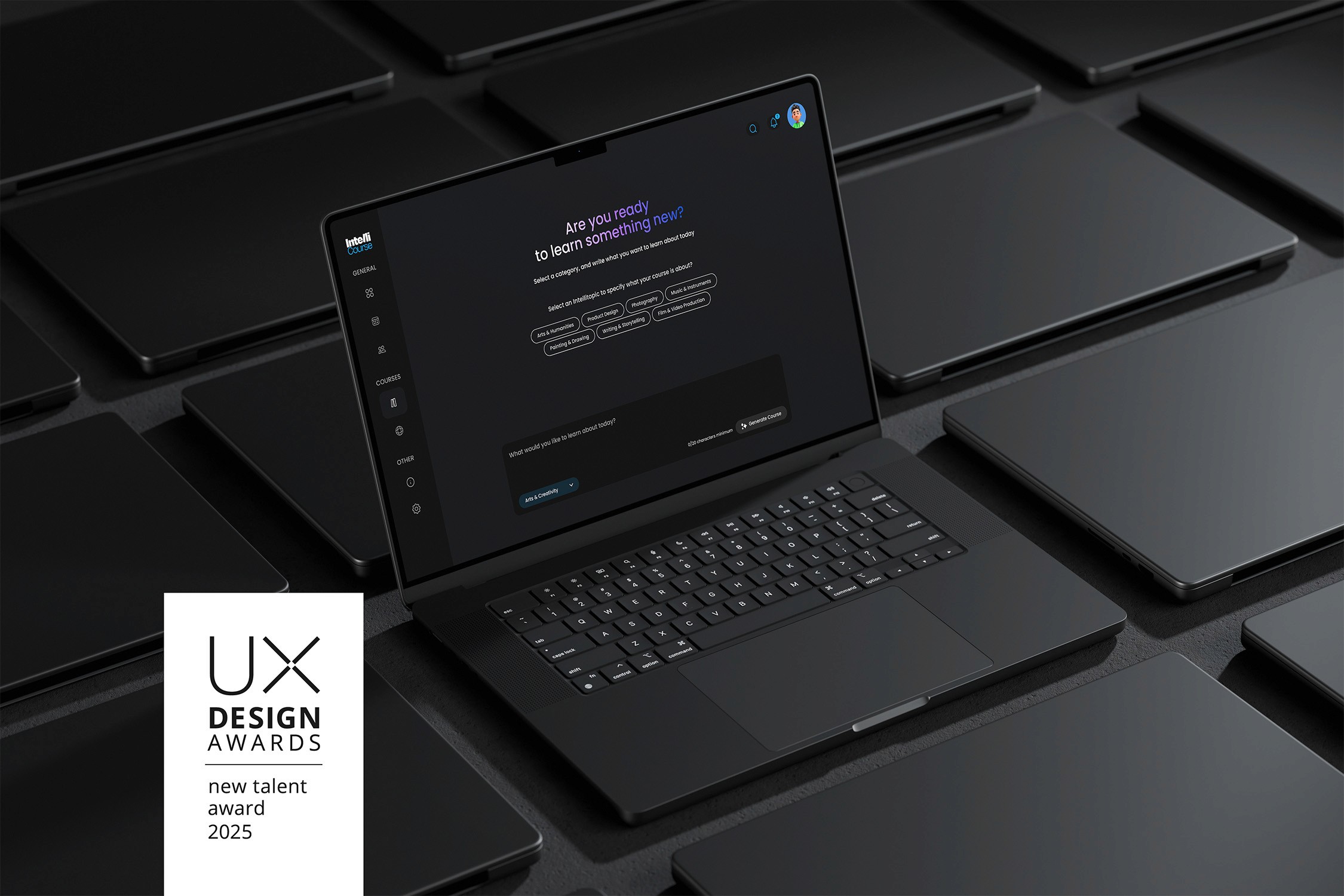
Recognized with the IDZ Berlin New Talent UX Design Award
100+ beta users and 35% improvement in task success
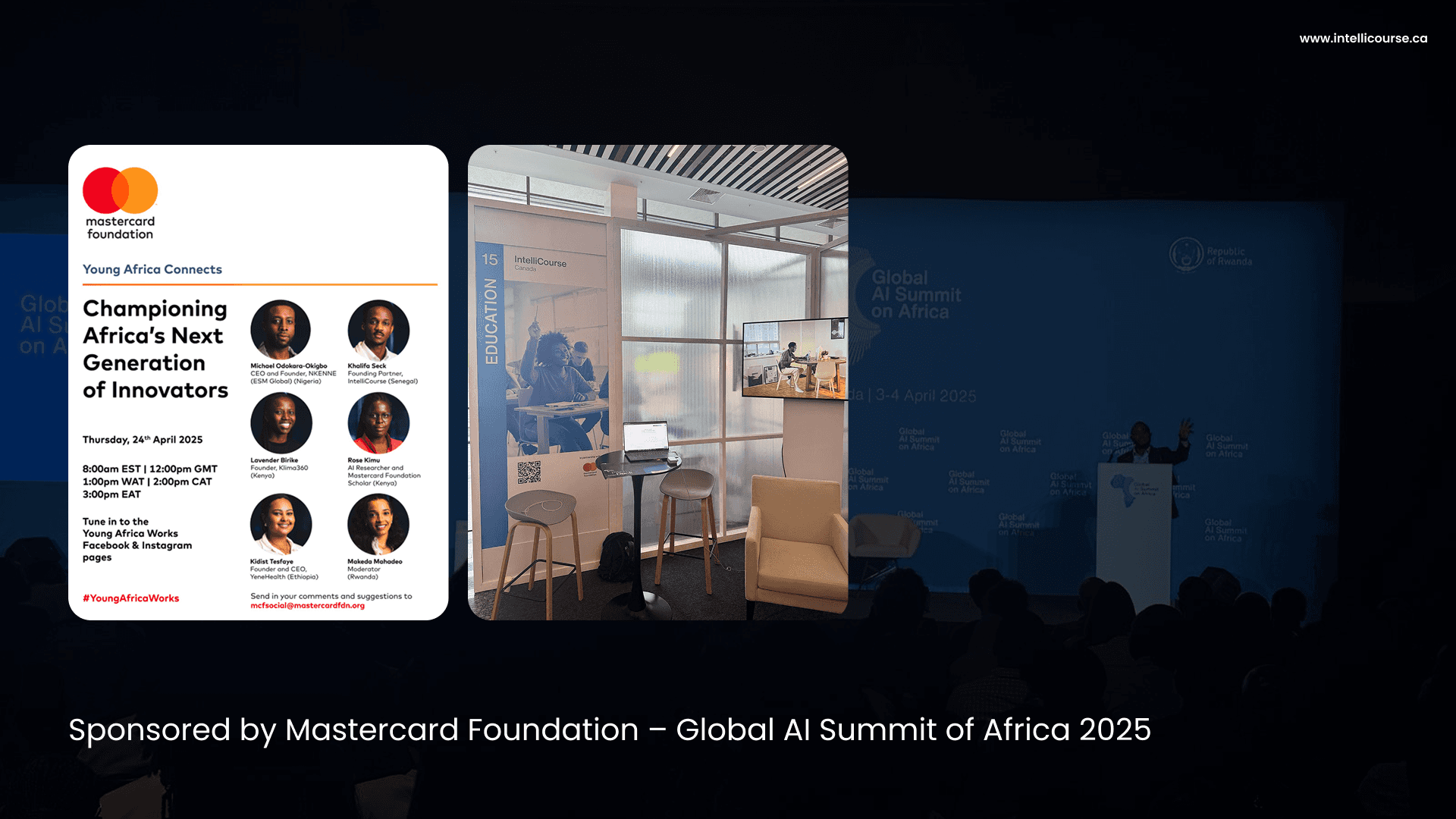
Presented at GAIS 2025 and represented internationally, including Rwanda
Positioned for an exit strategy following validation and traction
Research
We conducted interviews with teachers, trainers, and learners from both academic and corporate environments to understand their daily frustrations with existing platforms. Patterns quickly emerged: educators were spending hours building and grading content manually; students felt disconnected from rigid, linear learning experiences; and institutions lacked tools to measure progress or personalize learning pathways effectively. We also analyzed major LMS platforms and edtech tools, identifying a gap between automation and adaptability, most systems focused on administration, not learning outcomes.
Insights, Actions, Results
Learners often understand their goal, but lack clarity on where to begin and how to sequence their learning.
WHY this matters
Static course libraries and search-based discovery push cognitive effort onto the learner before learning even begins, causing hesitation, drop-off, and shallow engagement.
ACTION
We designed IntelliCourse to convert a learner’s intent into a complete, structured learning path automatically. Instead of browsing a static library, users define their goal and constraints upfront, and the system generates a sequenced course with the right level, materials, and assessments from the start.
RESULT
Learners move from goal to action in minutes, experience less hesitation at the entry point, and stay oriented throughout the learning process with clear next steps at every stage.
Personalization and AI often exist as surface features rather than structural systems.
WHY this matters
Label-based personalization and unconstrained AI outputs created inconsistent experiences and reduced trust, even when the content itself was accurate.
ACTION
I worked closely with engineering to shape our AI output into predictable formats and used modular course logic to ensure personalization meaningfully shaped pacing, difficulty, and assessment rather than just content labels.
RESULT
The platform feels reliable and intentional, improving clarity, task completion, and user confidence in AI-generated content.
AI Logic
We treated the prompt to focus on intent rather than instruction. Users described their goal, context, and constraints, which were structured into a constrained prompt that enforced sequence and dependency before generation. The AI produced a full course outline with ordered modules and assessments, not isolated lessons.
We understood that the model could hallucinate at times as we were building our guardrails, so we designed it to be inspectable and editable so that users could review, reorder, or regenerate individual sections instead of restarting, to preserve trust.
To address latency and uncertainty, I designed a streaming generation state that revealed structure before detail, showing progress in meaningful chunks. This reduced perceived wait time, made the system’s logic visible, and reinforced clarity by allowing users to follow the AI’s reasoning as the course took shape.
Assessment quality and feedback do not scale through manual effort alone.
WHY this matters
Educators spent excessive time creating and grading assessments, while learners received delayed or inconsistent feedback, especially for performance-based skills.
ACTION
I designed the interfaces of our AI-driven assessment tools, including quizzes and writing evaluations that provided structure to our technology’s immediate feedback on clarity, structure, and delivery.
RESULT
Learners receive timely, actionable feedback at scale, while educators regain time without sacrificing instructional quality.
Discover
The Discover page allowed learners to explore and join existing learning paths, reducing friction for those who didn’t want to start from scratch. Our first iteration relied too heavily on trending courses and topics, which exposed a cold-start challenge at low user volume and weakened the feedback loop early on. In a future iteration, Discover would prioritize curated and role-based learning paths first, layering in trending signals only once meaningful scale exists.
Micro-Interactions
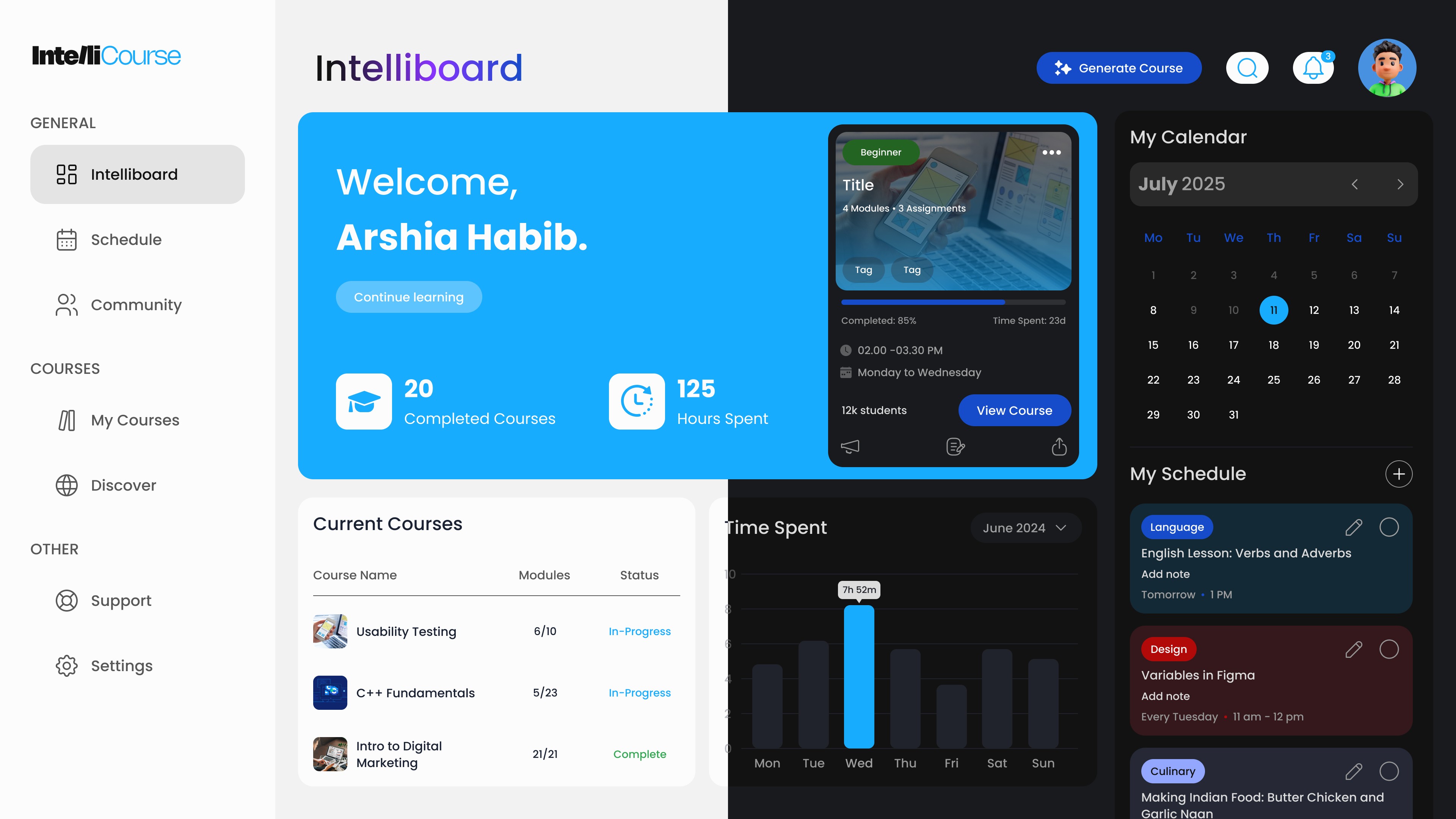
Micro-interactions helped IntelliCourse feel flexible and personal rather than rigid. They enabled users to easily adjust schedules, engage with the community, and personalize their learning while receiving clear, real-time feedback, especially during AI-driven actions. This reduced cognitive load and made complex workflows feel intuitive and responsive.
Accesibility
Accessibility improvements were driven directly by user feedback. Adjustable font sizing and light and dark modes allowed learners to tailor the interface to their visual needs and environments, improving readability and reducing fatigue. These changes helped ensure the platform remained inclusive and usable across diverse contexts.
One of the biggest learning curves on IntelliCourse was designing for accessibility. Adapting the product midway highlighted the importance of considering accessibility from the very beginning, starting with brand and system decisions. I’m grateful to have worked with a dedicated team of five, with our work recognized by the IDZ Berlin UX Design Awards, our university, and Product Hunt, and to have presented at GAIS 2025 and represented IntelliCourse internationally. As we move toward an exit, the project remains a formative chapter in my growth as both a UX designer and entrepreneur.